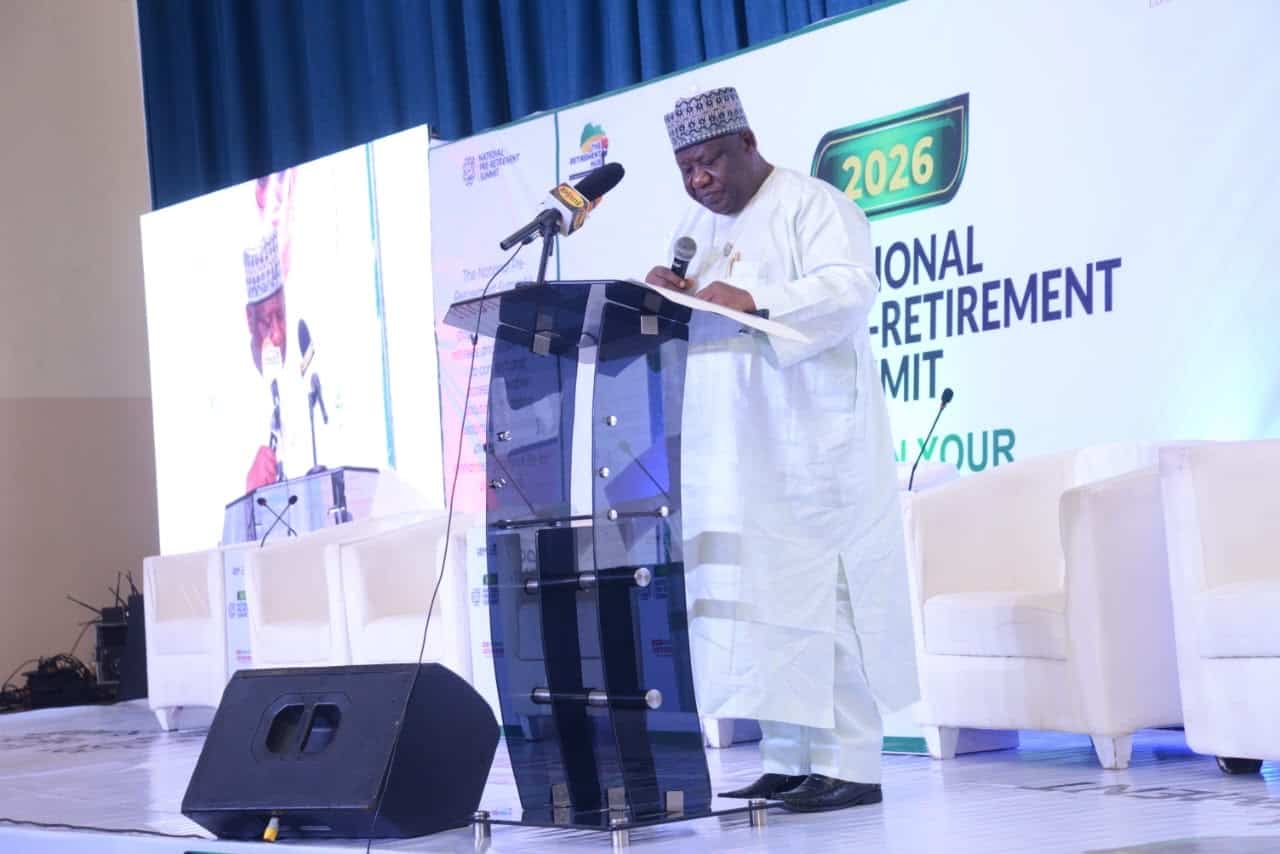
The Director-General of the Bureau of Public Service Reforms (BPSR), Mr. Dasuki Ibrahim Arabi, has called on workers to take greater personal responsibility for their retirement planning, stressing that securing a dignified post-service life should not be left solely to government, employers or pension administrators.
Arabi made the call in his keynote address at the 2026 National Pre-Retirement Summit (NPS 2026), holding in Abuja under the theme “Own Your Retirement: From Planning to Action.”
The two-day summit, convened by XEM Consultants Ltd, is taking place on September 24 and 25 at the Shehu Musa Yar’Adua Centre, Abuja, bringing together policymakers, labour leaders, pension administrators, financial experts, health professionals, entrepreneurs and workers approaching retirement.
Arabi said retirement planning should be viewed as part of a broader national workforce policy rather than merely a personal financial concern, noting that workers need to prepare for the financial, psychological, health and practical realities of life after active service.
He emphasised that while government and employers have important responsibilities in providing an effective retirement system, individuals must also understand their financial position and take deliberate steps to secure their future.
“Planning is important, but planning without action remains intention. For the individual worker, ownership means knowing where you stand.”
According to the keynote, recent government interventions have sought to strengthen the welfare and retirement security of workers and pensioners.
Among the measures highlighted were the New Exit Benefit (Gratuity) Scheme, under which eligible federal civil servants are to receive gratuity equivalent to 100 per cent of their annual emoluments in addition to pension benefits.
The address also highlighted pension-related interventions, including a reported 22 per cent increase in monthly pension payments, a ₦32,000 monthly adjustment for eligible retirees under Treasury-funded MDAs who retired before July 29, 2024, the clearance of 21 months of pension arrears, and a ₦758 billion pension bond to address legacy liabilities.
The ₦32,000 adjustment, which took effect from July 29, 2024, is documented in a National Pension Commission circular covering retirees under specified salary structures.
Arabi also drew attention to the BPSR’s pre-retirement training initiative, which is designed to equip retiring officers with practical knowledge for the transition from active service.
The programme covers areas including personal financial planning, entrepreneurship, post-retirement vocational activities, pension management, information and communication technology, small business development, health and wellness management, among others. BPSR says the programme is being implemented for various categories of retiring staff of federal parastatals across the six geopolitical zones.
The keynote also called for a broader understanding of retirement planning, particularly in view of Nigeria’s labour-market realities.
With a large proportion of Nigerians working outside formal employment, retirement planning, the summit noted, should extend beyond civil servants to include traders, artisans, farmers, freelancers and small business owners.
The summit further examined the growth of Nigeria’s pension system, with pension assets reported at ₦29.52 trillion as of January 2026 and membership standing at 11.18 million accounts.
However, the keynote raised an important policy question: whether growth in pension assets should be measured only in terms of financial accumulation or by its actual impact on the security and wellbeing of retirees.
The summit called for a review of the 2014 Pension Reform Act to reflect current economic and labour-market realities and expand pension coverage to workers in the informal sector and low-income groups.
It also recommended the clearance of outstanding liabilities under the Defined Benefits Scheme, stronger compliance enforcement and improved pension investment strategies.
Participants were urged to begin retirement planning early in their careers and continuously review their savings, debts, housing arrangements, healthcare needs and family obligations as they approach retirement.
The summit also highlighted the growing role of digital technology and artificial intelligence in redefining work, income generation and post-retirement opportunities.
The Convener of the summit, Dr. Eugenia Ndukwe, said the changing nature of work means retirement can no longer be viewed simply as the point at which an individual stops earning.
According to her, digital tools now offer professionals opportunities to continue contributing, mentoring, consulting, investing and building businesses beyond traditional retirement age.
She said the summit was designed to help participants translate retirement planning into concrete decisions and sustainable post-career opportunities.
The 2026 summit’s programme includes policy discussions on pensions and workforce transition, technical sessions on financial planning, health, entrepreneurship and digital skills, as well as opportunities around investment, post-retirement income and knowledge monetisation.
The organisers said the ultimate objective is to promote a culture in which workers begin preparing early for retirement and approach the transition with adequate financial knowledge, relevant skills, good health, purposeful engagement and realistic plans for sustainable income.
The summit is being supported by institutions and organisations including the Bureau of Public Service Reforms, National Pension Commission, Pension Transitional Arrangement Directorate, Nigeria Labour Congress, Trustfund Pensions and Galaxy Backbone, among others.
Sign: Aliyu Umar Aliyu,
Head, Strategic Communication
25th September, 2026.